Digital events
19 August 2026
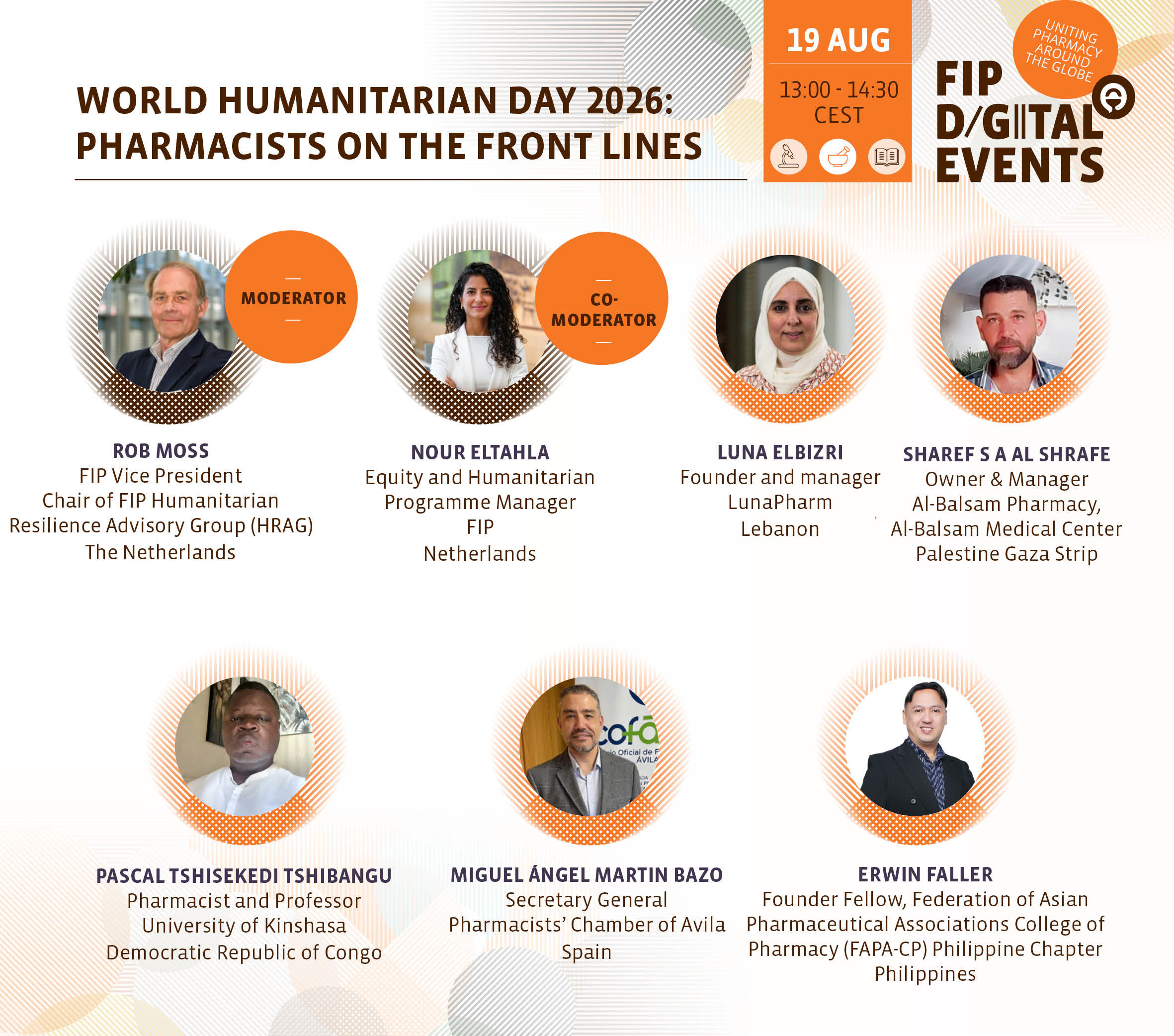
World Humanitarian Day 2026: Pharmacists on the front lines
Humanitarian crises, including armed conflict, natural disasters, displacement and public health emergencies, continue to disrupt health systems and limit access to essential medicines and pharmaceutical care. Pharmacists play a vital role in maintaining continuity of care and supporting affected communities, often under extremely challenging circumstances, yet their contributions are frequently overlooked.
/> As part of FIP's HumanityRx programme and in recognition of World Humanitarian Day 2026, this digital event will bring together pharmacists from crisis-affected settings to share their lived experiences, practical lessons and innovative approaches to delivering care during emergencies. Through these perspectives, participants will gain a deeper understanding of pharmacy's critical role in humanitarian response and explore how the global pharmacy community can strengthen preparedness, solidarity and support for colleagues working in crisis settings.
Moderator:
-Rob Moss, FIP Vice President and Chair of FIP Humanitarian Resilience Advisory Group (HRAG), Netherlands.
Co-moderator :
-Ms Nour Eltahla, Equity and Humanitarian Programme Manager, FIP, Netherlands
Panellist:
-Dr. Luna Elbizri, Founder and manager, LunaPharm, Lebanon.
-Prof. Pascal Tshisekedi Tshibangu, Pharmacist and Researcher, National council of Pharmacist also University of Kinshasa, Democratic Republic of Congo.
-Mr Miguel Ángel Martin Bazo, Secretary General Pharmacists’ Chamber of Avila, Colegio Oficial De Farmacéuticos De Ávila (Pharmacists’ Chamber Of Avila), Spain.
-Dr. Sharef S A AL shrafe, Owner & Manager, Al-Balsam Pharmacy and Al-Balsam Medical Center; Board Member - Palestinian Pharmacists Association (Southern Governorates - Gaza Strip), Palestinian Pharmacists Association (Gaza Strip), Palestine Gaza Strip.
-Prof Dr Erwin Faller, Academic Director and Professor, Academic Director and Professor, Holy Child Central Colleges inc, Philippines.
13 August 2026
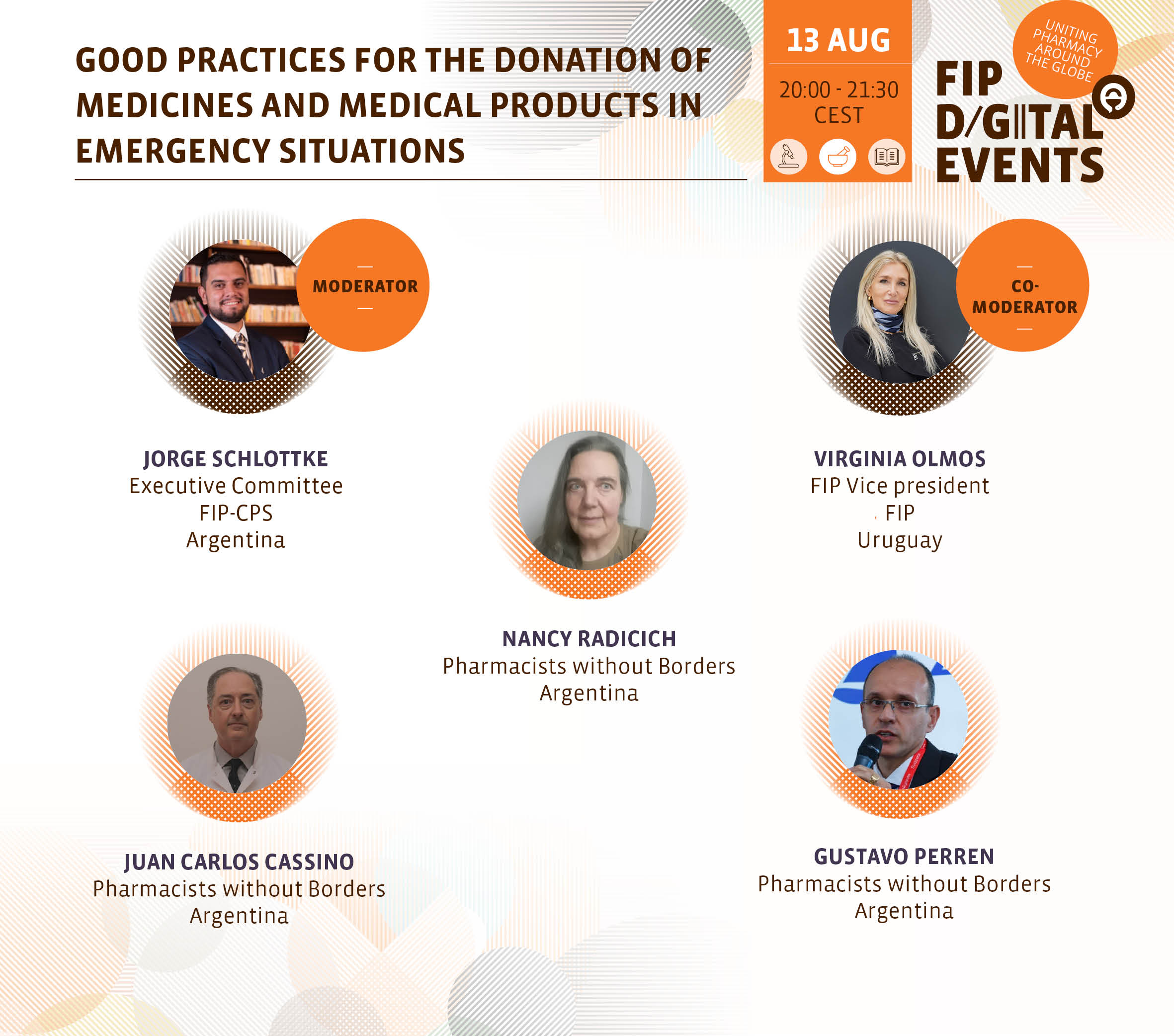
Good practices for the donation of medicines and medical products in emergency situations
Natural disasters and emergency situations often generate remarkable solidarity and a large volume of spontaneous donations of medicines and medical supplies. However, when these donations do not respond to actual needs or fail to follow technical criteria, they can become an additional burden for healthcare systems and humanitarian organizations, ultimately causing more harm than benefit to the affected communities.
harmacists Without Borders Argentina has more than 20 years of experience in donation management and emergency response. The organisation has participated in numerous interventions related to wildfires, floods, and other disasters, developing protocols for the classification, evaluation, distribution, and disposal of medicines and medical supplies.
Moderator:
- Jorge Schlottke, Executive Committee, FIP-CPS, Argentina.
Co-moderator:
-Virginia Olmos, FIP Vice president, FIP, Uruguay.
Panellists:
-Juan Carlos Cassino, Farmaceuticos sin fronteras, Argentina.
-Nancy Radicich , Farmaceuticos sin fronteras, Argentina.
-Gustavo Perren , Farmaceuticos sin fronteras, Argentina.
4 September 2024
How to take humanitarian action during times of emergency: The February 2023 Turkiye Earthquake
During the earthquakes in February last year, the Turkish Pharmacists Association reacted swiftly to the crisis. They quickly assembled pharmacists and sent them to the affected cities with donated medicines from all around Turkiye. These pharmacists assessed the most urgent medical needs and facilitated the transfer of essential medicines to the affected areas.
tched mobile truck pharmacies to ensure ongoing healthcare services. This rapid response and strategic deployment of resources helped
provide critical medical assistance to earthquake victims.
19 August 2024
World Humanitarian Day 2024: Pharmacists on the frontline
On 11/12/2008, the United Nations General Assembly set the 19th of August as the Humanitarian World Day, to remember the humanitarians, who risk their lives every day in the most critical crisis of the world. Pharmacists from diverse sectors and countries, ranging from academic settings to fieldwork, and from ongoing crises to those in the past, will share their experiences and stories of working and serving patients and the public in humanitarian and emergency settings.
ession, we will explore common transitional phases pharmacists and pharmacy team may encounter during crises, including:
• The pharmacist professional journey
• Transitioning from normality to emergency
• Crisis recovery
• Global initiatives
• The pharmacist professional journey
• Transitioning from normality to emergency
• Crisis recovery
• Global initiatives
23 July 2024
Pharmaceutical supply chain resilience in humanitarian crises
Global healthcare and pharmaceutical supply chains during humanitarian crises have become increasingly critical issues, requiring urgent attention to ensure the timely and safe delivery of medications and pharmaceutical products to patients in need. The importance of this issue is underscored by the consequences of supply chain disruptions, particularly during times of crisis.
stakeholders in the health and humanitarian supply chain, including pharmacists, play a key role in ensuring that safe and high-quality medicines are dispensed to patients during these critical situations. FIP is hosting a digital event to explore challenges and opportunities in maintaining a resilient supply chain, focusing on how to better equip the global healthcare system, particularly pharmacists, to respond to emergencies and crises, saving lives and improving patient outcomes.
Moderator:
- Ruben Viegas, FIP Humanitarian and Sustainability Programme Manger FIP, The Netherland
Panellists:
- Wilson Chandomba, Consultant CMCOMMS, Zimbabwe
- Ronald Guse, International Digital Health Consultant National Association of Boards of Pharmacy (United States), Canada
- Eiko Kobayashi, Chief Pharmacist Japanese Red Cross Medical Center, Pharmacy / International Medical Relief Department, Japan
- Lucas Ercolin, Area Manager IDA Foundation, Brazil (Currently living in Netherlands)
22 November 2023
Sharing perspectives on the pharmacists’ needs in humanitarian settings
FIP has developed a humanitarian programme that aims to identify all areas FIP can provide to support pharmacists and pharmacy teams in crises. Very often, pharmacists provide essential roles and services by supporting the distribution of medicines to patients and providing advice on stock management.
/>
At FIP, we wish to support the profession in countries during a crisis and create awareness of pharmacists’ roles in disasters and emergencies, using their communities as support frameworks to ensure the profession’s preparedness. This event aims to showcase different emergency and disaster situations, showcasing the needs for the different countries and regions and pointing out how pharmacists can be involved.
Moderator:
- Rúben Viegas, Practice Development and Transformation Projects Coordinator FIP, The Netherlands
Facilitator:
- Nour ElTahla, Projects Coordinator – Equity, sustainability policy and development FIP, The Netherlands
Panellists:
- Andraž Počič, MPharm, head of community pharmacy JZ Koroška Lekarna, Lekarniška podružnica Mislinja, Slovenia
- Hwaida Elsadig, Head of pharmacy practice department University of Medical Sciences and Technology Khartoum/Sudan, Sudan
- Catherine Duggan, Chief Executive Officer FIP, The Netherlands
- Prosper Hiag, Vice President FIP, Cameroon
- Salami Nouredine, Pharmacien SIGMAPHARM, Morrocco

16 August 2023
Lessons learnt pandemic preparedness resp and rec: Launch of a new FIP pandemic preparedness report
Following the pandemic, how to continue to lead the profession globally and support our members during those uncertain times became a core priority for FIP in 2023. As we move on from responding directly to COVID-19 to responding to the aftermath and to readying ourselves for future pandemics and health emergencies, FIP sought to derive key lessons, recommendations and considerations for the future in another report, “Pandemic Preparedness, Response and Recovery: Lessons Learnt for Global Pharmacy” which will be launched at the digital event on August 16.
/>
The event moderators are:
- Sherly Meilianti – FIP Data and Intelligence Specialist
- Farah Aqqad – FIP Regional, Enngagement Support and Development Manager
- Nour Eltahla – FIP Projects coordinator for equity, sustainability policy and development, The Netherlands
The event speakers are:
- Lina Bader – FIP Lead for equity, sustainability policy and development, The Netherlands
- Rao Vadlamudi - Immediate Past President, Indian Pharmaceutical Association (IPA); Professional Secretary, SEARPharm Forum, India
- Jackie Maimin, Chief Executive Officer, Independent Community Pharmacy Association (ICPA); Council member, Pharmaceutical Society of South Africa, South Africa
- Rony Zeenny, Director, Department of Pharmacy, American University of Beirut Medical Centre; INSPECT-LB, Lebanon
- Clare Fitzell, Head of Strategic Policy, Irish Pharmacy Union, Ireland
- Leonor Soares, International Affairs, Portuguese Pharmaceutical Society, Portugal
- Nobuo Yamamoto, President, Japan Pharmaceutical Association, Japan
- Maria Mendes, Area Manager, Public Health Interventions and Pharmacy Services, National Association of Pharmacies, Portugal
- Sofía Segura, University of Costa Rica and College of Pharmacists of Costa Rica, Costa Rica
- Mary Ann Sant Fournier, President, Malta Chamber of Pharmacists, Malta
10 May 2023
A global view of pharmacists’ needs in humanitarian settings
The Global Humanitarian Competency Framework (GbHCF) is a holistic developmental framework designed to be used for pharmacists working in the humanitarian arena internationally. The developmental framework has a clear link with the FIP Global Competency Framework (GbCF) embedding the same four clusters of competencies that are required for effective performance when working in a humanitarian arena.
obal perspective in mind, the framework ensures that an “adopt and adapt” approach for implementation can be consistently applied at global, regional, national and organisational levels.
Moderator:
- Rúben Viegas, Practice Development and Transformation Projects Coordinator FIP - The Netherlands
- Marwan Akel, Projects Manager Workforce development evidence & impact Journal Editor – Pharmacy Education Journal (PEJ) FIP - The Netherlands
Facilitator:
- Nour ElTahla, Projects Coordinator – Equity, sustainability policy and development FIP - The Netherlands
Panellists:
- Ali Burak Salman, Membership Marketing Coordinator FIP - The Netherlands
- Rony Zeenny, Director, Department of Pharmacy American University of Beirut Medical Center INSPECT-LB - Lebanon
- Tasnim Khan, Policy Officer The Pharmacists’ Defence Association - United Kingdom
- Catherine Duggan, Chief Executive Officer FIP - The Netherlands
Moderator:
- Rúben Viegas, Practice Development and Transformation Projects Coordinator FIP - The Netherlands
- Marwan Akel, Projects Manager Workforce development evidence & impact Journal Editor – Pharmacy Education Journal (PEJ) FIP - The Netherlands
Facilitator:
- Nour ElTahla, Projects Coordinator – Equity, sustainability policy and development FIP - The Netherlands
Panellists:
- Ali Burak Salman, Membership Marketing Coordinator FIP - The Netherlands
- Rony Zeenny, Director, Department of Pharmacy American University of Beirut Medical Center INSPECT-LB - Lebanon
- Tasnim Khan, Policy Officer The Pharmacists’ Defence Association - United Kingdom
- Catherine Duggan, Chief Executive Officer FIP - The Netherlands

27 October 2022
Special event on pandemic preparedness Pharmacy’s global responses to the COVID-19 pandemic
This special event is held during a week which marks two significant dates for global health. We will have passed the 1000 days since 30 January 2020 when the World Health Organization declared the COVID-19 outbreak at the time as a Public Health Emergency. The same week will also mark the 4th anniversary since the world, including FIP, came together in Astana in 2018 to endorse the new Declaration of Astana emphasizing the critical role of primary health care.
n us on this special launch event on pandemic preparedness to learn about global pharmacy’s response to COVID-19 and discuss the important of resilient pharmacy and health systems.
Learning objectives:
- Understand how FIP supported (and continues to support) its members during the pandemic
- Describe how pharmacy leadership bodies responded to the pandemic across the world
- Discuss country best practices and lessons for future pandemic preparedness
- Learn about FIP’s map of primary health care, focusing on strengthening health systems and recovery