Blog
8 October 2024
Pharmacist beyond borders: Lessons from humanitarian frontlines
Embracing the role of a humanitarian pharmacist is not just a career, it's a powerful dedication to the betterment of humanity. Every day presents fresh and exhilarating challenges, and although the journey might be arduous, the returns are incredibly fulfilling. The real joy lies in the people you encounter, the relationships you forge, and the remarkable chance to collaborate with individuals from diverse corners of the globe.
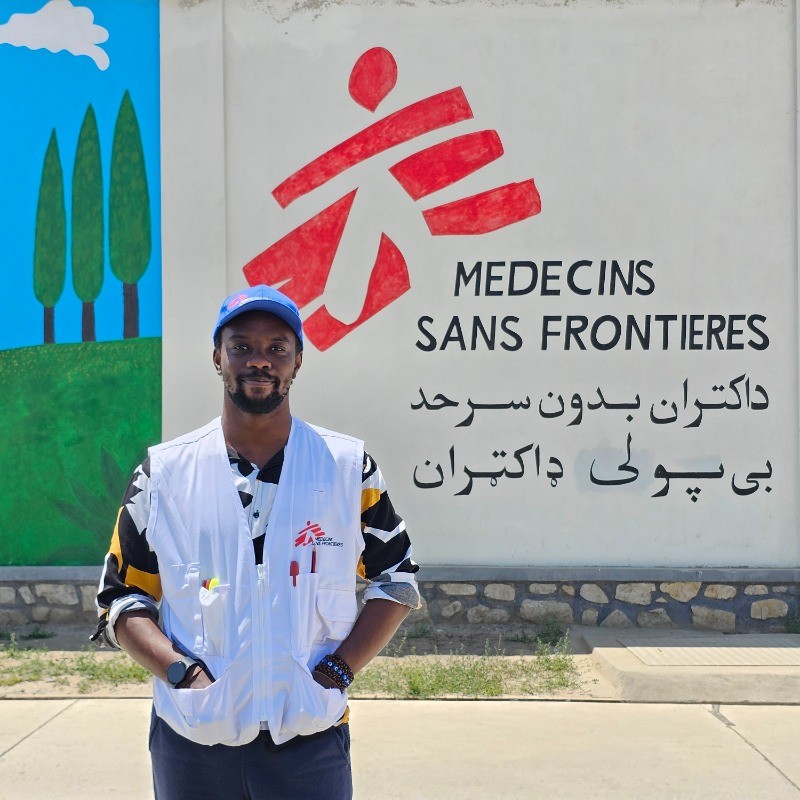
As a pharmacist, my role has taken me from the bustling healthcare systems of Sierra Leone to the high risk zones of Afghanistan, where my responsibilities extended far beyond managing medicines. I’ve learned what it means to be resilient, to lead with empathy, and to help bring life-saving care to those who need it most. These experiences have not only shaped my career but have strengthened my belief in the power of humanitarian work and the vital role pharmacists play on the frontlines of crisis.
Sierra Leone: Transforming lives through clinical pharmacy
In Sierra Leone, as a Clinical Pharmacy Manager, I witnessed firsthand the power that pharmacists have in directly impacting patient care. Establishing a clinical pharmacy department allowed us to enhance medication safety and personalise treatment, even with limited resources. I quickly learned that in resource-constrained settings, managing clinical care requires adaptability and creative problem-solving. When faced with shortages of essential medicines, I worked closely with medical teams to ensure our patients received the best possible care, even when supplies were running low.
Empowering local staff was another critical part of my work. By mentoring them and sharing best practices, we not only improved pharmacy services but also ensured sustainability long after external support had ended. This experience solidified my belief that pharmacists can be a driving force for better healthcare, even in the most challenging conditions.
Afghanistan: Leading with humility and empowering communities
Afghanistan presented its own set of challenges. As a Project Pharmacy Manager, I managed supply chains in a high-risk zone while balancing the cultural and security dynamics. One of the most important lessons I learned here was avoiding “saviourism syndrome”. Humanitarian work is not about “saving” people, but about partnering with and empowering local communities. In Afghanistan, I worked closely with local healthcare providers to follow treatment protocols that were adapted to the available resources.
Resilience was another key aspect in Afghanistan. Despite constant security risks, the dedication of the local teams was inspiring. Their strength and commitment taught me that leadership in crisis situations goes beyond logistics—it’s about fostering a culture of support, empathy, and open communication. This empowered our team to overcome even the toughest challenges and continue delivering vital care under immense pressure.
Pharmacists: Champions of change in crisis zones
From Sierra Leone to Afghanistan, one consistent truth emerged: pharmacists are more than medicine managers in humanitarian settings. We are agents of change, bridging the gap between logistical challenges and patient care. By collaborating with local staff and building their capacity, we ensure healthcare systems can thrive long after we leave. The ability to adapt, lead with empathy, and support communities in crisis makes pharmacists crucial players in humanitarian healthcare.
Looking ahead: A vision for continued impact
These experiences with MSF have strengthened my commitment to advocating for better access to essential medicines worldwide. The lessons I’ve learned continue to inspire me as I strive to ensure pharmacists remain at the forefront of humanitarian efforts. I am excited to continue this journey, knowing that even in the most difficult circumstances, pharmacists can bring hope, healing, and lasting change.
24 September 2024
World Pharmacist Day 2017: An interesting beginning to humanitarian work
World Pharmacist Day, 25 September 2017, marked a significant personal and professional milestone. It was not just a day to celebrate pharmacists globally, but also the date of the independence referendum for the Kurdistan Region of Iraq. It was also the day I boarded a flight to my first humanitarian job as a Pharmacy Coordinator, flying into Iraq blissfully unaware of how profoundly this referendum would shape my year ahead.
A few days later, due to the referendum results, the Iraqi government shut down international airports in Kurdistan. The issue for me, in particular? All our medical supplies for three internally displaced person (IDP) camps and over ten mobile health teams were imported through Erbil airport, following Kurdish import regulations. With the airport closure, our already dwindling warehouse stock was about to soon take an even bigger hit as we scrambled to find alternative routes to bring in our medical procurement.
Most of our projects were funded by the Office of U.S. Foreign Disaster Assistance (OFDA) — now the Bureau for Humanitarian Assistance (BHA) — which did not allow for local procurement. Our operations ranged from basic primary care, which we could somewhat support through loans from partner organisations or internal reallocations, but the needs were more complex elsewhere, such as Salamiyah camp, 20 km south of Mosul, where conflict had forced IDPs to flee, and from areas like the Al-Baaj district recently retaken from ISIS. There we operated a health centre offering Basic Emergency Obstetric and Newborn Care (BEmONC), including a delivery room. While obtaining some paracetamol and iron tablets may have been possible, when the need was oxytocin and magnesium sulphate for instance, the story was different.
The situation in Central and South Iraq wasn’t any better. Our projects in Baghdad, Anbar, and Najaf relied on WHO procurements, which were equally impacted by the evolving context. Even before this, medical procurement in the region was challenging, and now, transporting supplies from Erbil was almost out of the question.
What was a recent graduate, navigating my first "very real job", to do. Yet, a few key pharmacists became critical in solving this puzzle. In Kurdistan, the network of pharmacists working with NGOs was key in identifying available stocks across different organisations, facilitating the cross-loans of critical items based on each project's needs. The critically needed oxytocin was even hand delivered in a cold box to my office in Erbil by a fellow pharmacist (a person I saw years later in Kyiv, Ukraine.)
For the situation in Central and South Iraq, it was FIP Congress in Glasgow (yes, nearly 1 year later) that made the difference. Specifically, the MEPS Meet & Greet. It was my second FIP Congress, after Bangkok, and I knew a few people, but I knew MEPS would be where I would find those working in an emergency context like me.
There I met a pharmacist working with OFDA and I, without holding much back, shared my ongoing procurement troubles. The solution seemed to him to be obvious. “Why not purchase with…?”. “Well, because they never reply to me”, I said. The true answer. Within 30 minutes, he connected me directly to the contact point of an approved supplier capable of delivering pharmaceuticals straight to Baghdad airport. Problem solved!
I guess I learned quite early on that pharmacists can be a powerful force, and FIP can help create connections that transcend crises. I hope your 2024 World Pharmacist Day is as transformative and inspiring as it was for me in 2017, maybe just less dramatic!
14 May 2024
The pharmacist’s crucial role in humanitarian crises
In the midst of chaos and devastation, healthcare providers often emerge as unsung heroes, tirelessly working to alleviate suffering and restore hope. As someone deeply rooted in the field of pharmacy and pharmacy education, I've had the privilege of witnessing firsthand the transformative impact of pharmacists’ initiatives in humanitarian crises.
My journey in the realm of pharmacy and public health has been shaped by diverse experiences, but perhaps none as poignant as my involvement during the Gaza war. Amidst the turmoil, I witnessed the resilience of the human spirit and the crucial role of pharmacists and healthcare providers in mitigating the impact of conflict on public health.
One of the initiatives I spearheaded during this challenging time was the provision of online courses for pharmacy students whose universities were destroyed in the war. This initiative, undertaken by Al-Quds University, aimed to ensure continuity in education and empower future pharmacists to serve their communities amidst adversity. This initiative was not merely about delivering academic content; it was about providing a lifeline to pharmacy students whose dreams and aspirations were threatened by the ravages of conflict. By enrolling pharmacy students from Gaza as visiting students at Al-Quds University, we sought to offer them a sense of continuity and stability in their educational journey.
In collaboration with healthcare providers and supervisors in refugee shelters and camps, we engaged in vital discussions about infectious diseases and appropriate treatment strategies in resource-constrained settings. Pharmacists emerged as key players in delivering essential medications and providing health education to displaced populations, highlighting the critical role of pharmacists in humanitarian crises.
Reflecting on these experiences, several valuable lessons come to mind. Firstly, preparedness is paramount in navigating humanitarian crises. Investing in robust healthcare infrastructure and training healthcare professionals, especially pharmacists, in emergency response protocols can significantly enhance the effectiveness of disaster response efforts.
Secondly, collaboration and coordination among various stakeholders is essential for optimising resource allocation and ensuring the delivery of comprehensive care. By fostering partnerships between academia, healthcare institutions, and humanitarian organisations, we can leverage collective expertise to address complex health challenges in crisis settings.
Moreover, prioritising mental health support for both healthcare providers and affected populations is imperative. The psychological toll of humanitarian crises can be profound, underscoring the need for accessible mental health services and psychosocial support mechanisms.
Looking ahead, I envision a future where pharmacists continue to play a pivotal role in humanitarian crises. Leveraging advancements in telemedicine and digital health technologies, pharmacists can expand access to essential medications and clinical services in remote and underserved areas and during war time and crisis.
Furthermore, investing in capacity building initiatives and empowering local healthcare workers can enhance resilience and strengthen community-based healthcare systems, enabling prompt and effective responses to future crises.
In conclusion, my journey in pharmacy amidst humanitarian crises has been marked by challenges and triumphs alike. Through unwavering dedication and collaborative efforts, pharmacists can make a tangible difference in the lives of those affected by conflict and disaster. As we navigate the uncertainties of the future, let us remain steadfast in our commitment to serving humanity with compassion and resilience.