All publications
19 August 2025
Pharmacy’s global responses to emergencies and disasters: Country examples
This report showcases how pharmacists worldwide are supporting communities in times of crisis. Developed under FIP’s Humanitarian programme, it presents real-world case studies from countries including Cameroon, Japan, Lebanon, New Zealand, South Africa, Spain, Turkey and Ukraine, highlighting pharmacists’ roles in responding to derailments, natural disasters, disease outbreaks, armed conflicts and other emergencies.
13 May 2025
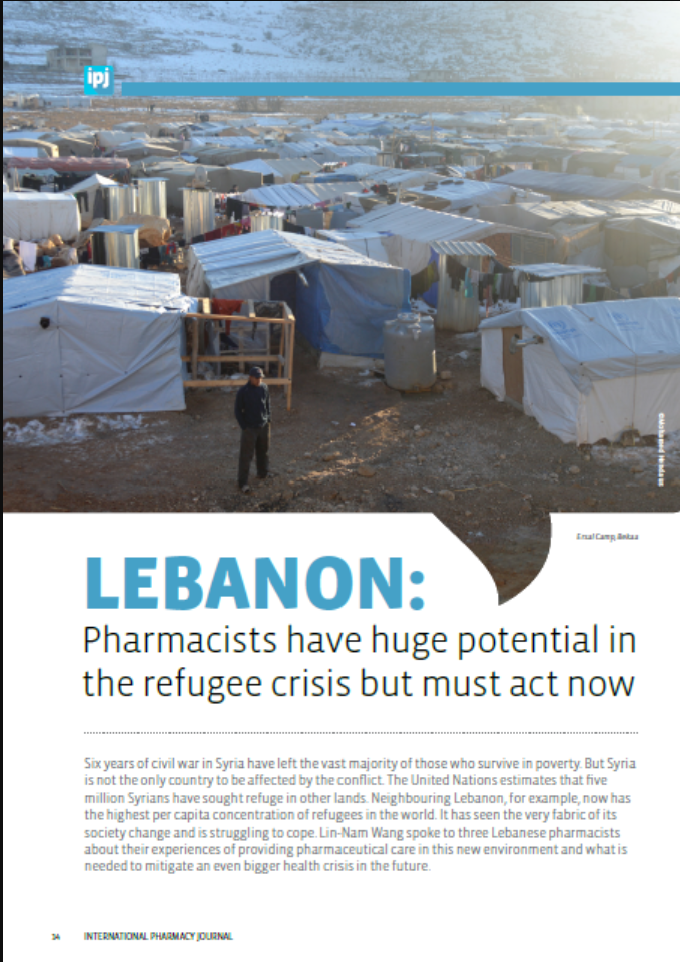
The humanitarian response of pharmacists in Lebanon: Lessons from the 2024 crisis and recommendations for the future.
17 October 2023
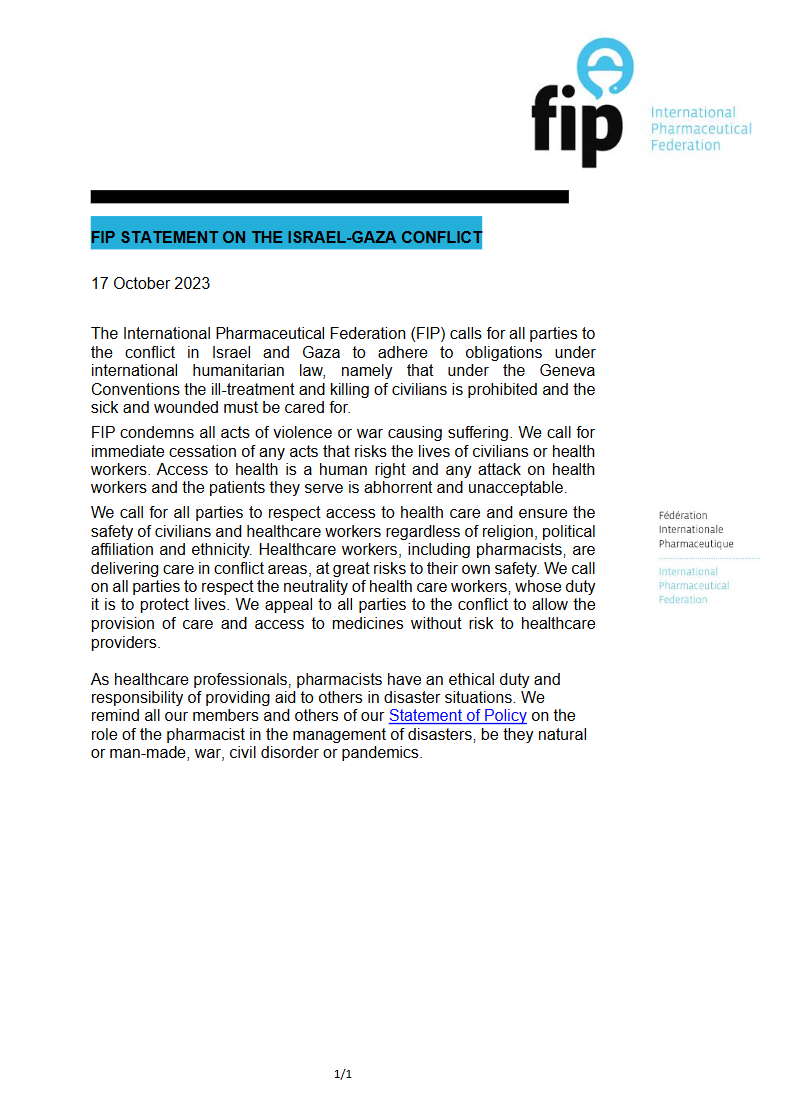
FIP statement on the Israel-Gaza conflict
24 September 2023
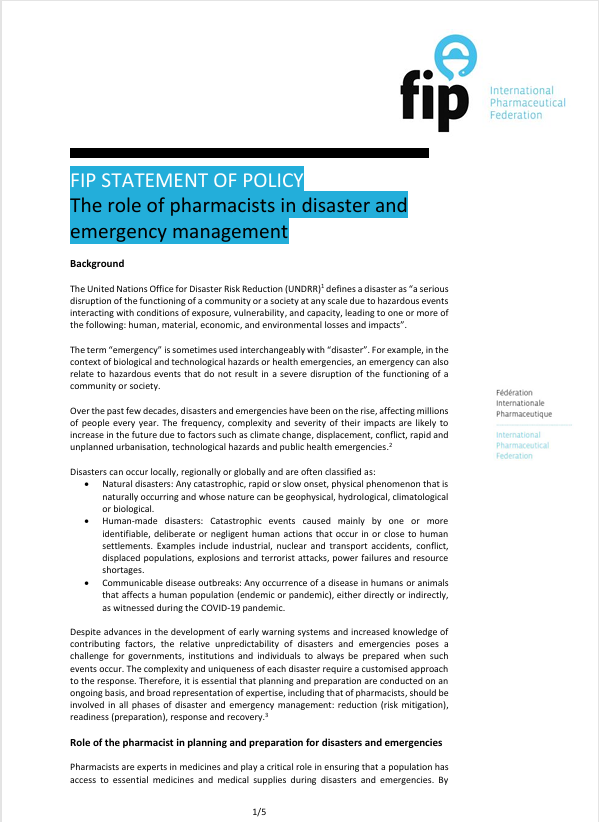
FIP Statement of policy: The role of pharmacists in disaster and emergency management
This statement of policy outlines the critical role of pharmacists in disaster and emergency management. It emphasises the increasing frequency and complexity of such events and the need for ongoing preparedness. Pharmacists are highlighted as key players in ensuring access to essential medicines and medical supplies, contributing to planning, preparation, response, and recovery efforts.
document calls for government collaboration, capacity-building initiatives, and inclusion of pharmacists in disaster response frameworks. It also encourages academic institutions to integrate disaster management education and research. Overall, the document advocates for the recognition and utilisation of pharmacists’ expertise in disaster and emergency situations to enhance community resilience and healthcare outcomes.
1 August 2023
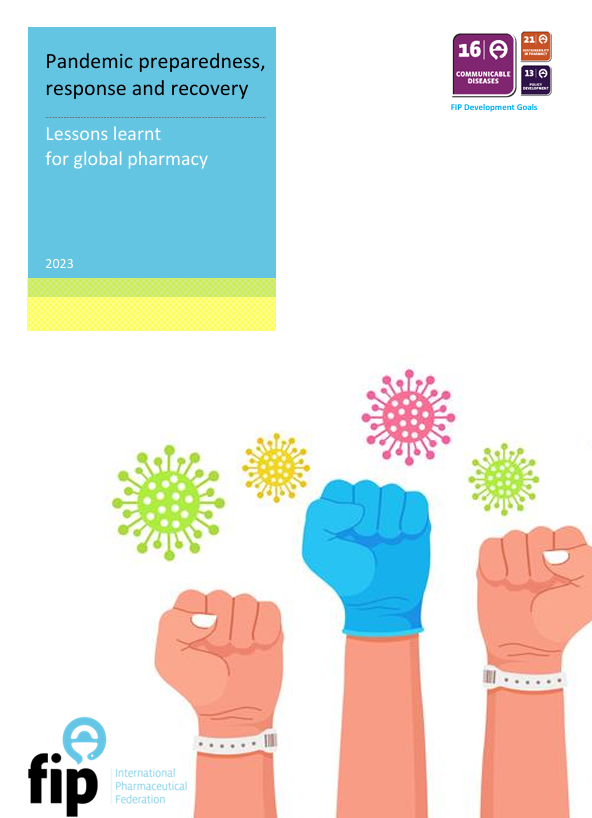
Pandemic preparedness, response and recovery: Lessons learnt for global pharmacy
This report focuses on the critical lessons learned by the global pharmacy community during the COVID-19 pandemic. It discusses the importance of preparedness, the agility of response, and strategies for recovery, with a focus on ensuring resilience in future health crises. The report covers key areas such as system transformation, investment in science and innovation, reshaping pharmaceutical practice, and accelerating universal health coverage.
also emphasises the need for a robust pharmacy workforce capable of adapting to changing demands and stresses the role of pharmacists in reducing inequities in health access and outcomes. This document serves as a guide for the pharmacy profession to build on the experiences of the pandemic to improve preparedness and response mechanisms for future global health challenges.
9 February 2023
FIP supports pharmacy students and early-career pharmacists in Turkey and Syria
27 October 2021
FIP Global Humanitarian Competency Framework (GbHCF)
- FIP GbHCF – Chinese version
- FIP GbHCF – Dutch version
- FIP GbHCF – Kurdish version
- FIP GbHCF – Portuguese version
- FIP GbHCF – Spanish version
The FIP Global Humanitarian Competency Framework (GbHCF) is a guide designed to support pharmacists and the pharmaceutical workforce in humanitarian settings.
outlines the unique competencies required for effective practice in these challenging environments, where traditional roles are adapted to meet the needs of communities affected by crises. The GbHCF serves as a foundation for training programs, aiming to standardise skills and knowledge for pharmacists in humanitarian work. It addresses the gap in structured training and development for pharmacists in this sector, promoting a consistent and evidence-based approach to healthcare in humanitarian contexts.
1 August 2021
FIP GbHCF – Arabic version
The FIP Global Humanitarian Competency Framework (GbHCF) is a guide designed to support pharmacists and the pharmaceutical workforce in humanitarian settings. It outlines the unique competencies required for effective practice in these challenging environments, where traditional roles are adapted to meet the needs of communities affected by crises.
GbHCF serves as a foundation for training programs, aiming to standardise skills and knowledge for pharmacists in humanitarian work. It addresses the gap in structured training and development for pharmacists in this sector, promoting a consistent and evidence-based approach to healthcare in humanitarian contexts.

13 September 2017
FIP Statement of Policy: Role of the pharmacist in disaster management (2017, Seoul)
This statement of policy outlines the critical role of pharmacists in disaster management. It emphasises that pharmacists have dual responsibilities: to prepare for potential disasters and to respond effectively during emergencies. The statement categorises disasters into natural, human-made, and disease outbreaks, each with distinct impacts on health services.
acists are urged to have risk assessment and management plans to minimise disruptions to pharmacy services. In times of crisis, pharmacists are expected to provide aid based on the population’s needs, government directives, and professional expertise.
1 July 2017
Responding to disasters: Guidelines for pharmacy
This guidance emphasises the importance of pharmacists in maintaining healthcare services during crises, detailing roles in prevention, mitigation, preparation, response, and recovery. The document outlines strategies for national organizations to develop policies and procedures that ensure the continuity of pharmacy services and access to medicines during disasters.
rves as a crucial resource for pharmacists to effectively contribute to emergency response efforts and enhance community resilience.
1 June 2015
Ethical principles of health care in times of armed conflict and other emergencies
This document outlines the ethical principles of healthcare during armed conflicts and emergencies, emphasizing that these principles remain unchanged from times of peace. It asserts that healthcare personnel must always adhere to international and national laws, ethical standards, and their conscience, prioritizing human health and suffering alleviation without discrimination.
also highlights the importance of patient consent, confidentiality, and protecting healthcare personnel and facilities. Finally, it calls for the signatory organizations to promote and implement these principles universally.
FIP GbHCF – Turkish version
The FIP Global Humanitarian Competency Framework (GbHCF) is a guide designed to support pharmacists and the pharmaceutical workforce in humanitarian settings. It outlines the unique competencies required for effective practice in these challenging environments, where traditional roles are adapted to meet the needs of communities affected by crises.
GbHCF serves as a foundation for training programs, aiming to standardise skills and knowledge for pharmacists in humanitarian work. It addresses the gap in structured training and development for pharmacists in this sector, promoting a consistent and evidence-based approach to healthcare in humanitarian contexts.

FIP GbHCF – French version
The FIP Global Humanitarian Competency Framework (GbHCF) is a guide designed to support pharmacists and the pharmaceutical workforce in humanitarian settings. It outlines the unique competencies required for effective practice in these challenging environments, where traditional roles are adapted to meet the needs of communities affected by crises.
GbHCF serves as a foundation for training programs, aiming to standardise skills and knowledge for pharmacists in humanitarian work. It addresses the gap in structured training and development for pharmacists in this sector, promoting a consistent and evidence-based approach to healthcare in humanitarian contexts.
International Review of the Armed Forces Medical Services The International Pharmaceutical Federation (FIP) and its role to support Ukraine
The International Pharmaceutical Federation (FIP) is a non-governmental organisation that has been in official relations with the World Health Organization since 1948 and is the global body representing over 4 million pharmacists and pharmaceutical scientists. The FIP signed a Memorandum of Understanding with the ICMM during the Basil congress, in order to increase the collaboration between the two organizations.